T1-2026 (Jan 2026) — FN shift · Solved
Every question below is the paper's own text, and every code snippet is the paper's own image, extracted from the PDF — nothing is retyped or guessed. Attempt each question, then open the answer. Answers are the officially marked ones; the reasoning is ours.
Part 1 · One-mark questions
Q2 · Why the CORS error happens
🟢 Easy · ⭐⭐ · 1 mark · Topic: CORS · Also asked: T1-2026 AN Q13/Q18, ET-1
Your frontend app on 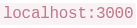 tries to fetch data from your backend API on
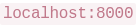 . The browser shows a "CORS error". Why?
- A. The backend server crashed while processing the request.
- B. The frontend is running on the wrong port.
- C. Browsers always delete data sent from port 8000.
- D. Browsers block cross-origin requests by default.
Answer — D
Browsers block cross-origin requests by default.
Why
The AN twin asked for the fix; this one asks for the reason — same concept from both ends. Different ports = different origins, and the browser's Same-Origin Policy blocks the read unless the backend opts in. Full reasoning: AN Q13.
Quick elimination: A would be a 500, not CORS; B invents a "correct" port; C is absurdist.
Q3 · FastAPI on GitHub Pages
🟢 Easy · ⭐ · 1 mark · Topic: Static hosting · Also asked: ET-1
You deploy your portfolio website to GitHub Pages. You try to add a Python FastAPI backend to handle form submissions directly on GitHub Pages. What happens when users try to submit the form?
- A. GitHub Pages converts Python to JavaScript for browser execution.
- B. Form submissions queue until you push new commits.
- C. Submission fails — GitHub Pages serves only static files, not backend code.
- D. GitHub creates a serverless function to handle POST requests.
Answer — C
Submission fails — GitHub Pages serves only static files, not backend code.
Why
GitHub Pages is a file server: HTML, CSS, images, client-side JS. No Python process, no database, no POST handling — the form submission simply has nothing to receive it. The correct architecture (asked as a short-answer in the AN paper): static frontend on Pages, FastAPI on a real runtime.
D is the seductive one — GitHub does have serverless (Actions), but Pages doesn't invoke it for form POSTs. When an option invents a bridge between two real products, check whether the bridge exists.
Q4 · response.json()
🟢 Easy · ⭐ · 1 mark · Topic: HTTP clients · Also asked: T1-2026 AN Q7, ET-1
You use Python's  library to get data from an API.
 gives you the raw string. What does
 do?
- A. Converts the JSON string into a Python dictionary.
- B. Contacts the API again to verify the data format.
- C. Deletes special characters for safety before printing.
- D. Automatically fixes formatting mistakes in the string.
Answer — A
Converts the JSON string into a Python dictionary.
Why
Same concept as AN Q7 — the exam asks it
once per shift. Remember the family: .text = string, .json() = parsed, and
json.loads demands double quotes (the single-quote crash was demonstrated
live in ET-1).
Q5 · Docker on Windows
🟢 Easy · ⭐ · 1 mark · Topic: Docker · Also asked: ET-1
You build a Docker image locally and push it to Docker Hub. Your colleague pulls it on Windows. Your code runs Ubuntu Linux inside the container. What happens?
- A. Docker Hub converts Linux containers to Windows during push.
- B. Container runs successfully — Docker provides Linux compatibility on Windows.
- C. Container crashes with "Platform Mismatch" error.
- D. Docker refuses to pull and shows an OS incompatibility warning.
Answer — B
Container runs successfully — Docker provides Linux compatibility on Windows.
Why
Docker's core promise — environment parity: the image carries its own Ubuntu userspace, so the host OS barely matters. "Works on my machine" dies here.
The professor's pairing: this works precisely because the container is isolated —
which is also why forgetting RUN pip install inside it crashes (see
Q11): the container shares nothing with your
laptop, including installed packages.
Q6 · Why HTTPS for tokens
🟢 Easy · ⭐ · 1 mark · Topic: Web security · Also asked: ET-1
Why is it highly recommended to use HTTPS instead of HTTP when sending an API token over the internet?
- A. HTTPS transfers data faster than standard HTTP.
- B. HTTPS encrypts data, making it unreadable if intercepted.
- C. HTTP is only allowed for transferring images and videos.
- D. HTTPS automatically fixes spelling errors in API requests.
Answer — B
HTTPS encrypts data, making it unreadable if intercepted.
Why
HTTP is cleartext: anyone on the path reads your token. HTTPS encrypts end-to-end. The professor taught the concept with the Caesar cipher (shift every letter by 2: "hello" → "jgnnq"): toy algorithm, real principle — scramble in transit, unscramble at the ends.
A is a classic distractor: HTTPS and HTTP differ in security, not speed. If the exam offers "faster" as the reason for a security feature, it's bait.
Q7 · asyncio.gather timing
🟢 Easy · ⭐⭐ · 1 mark · Topic: Concurrency · Also asked: T1-2026 AN Q21, ET-1
You run five network requests using  . Four finish in 1 second, one takes 10 seconds. How long does
 take total?
- A. 1 second — stops after the fastest request finishes.
- B. 5 seconds — the average time of all requests.
- C. 3 seconds — stops automatically to avoid long waits.
- D. 10 seconds — must wait for the slowest request to finish.
Answer — D
10 seconds — must wait for the slowest request to finish.
Why
The numerical twin of AN Q21: concurrency replaces the sum with the max. The professor's arithmetic: 4 requests at 1s + 1 at 10s = 10 seconds, not 5, not 1.
Q8 · Why .env files exist
🟢 Easy · ⭐⭐ · 1 mark · Topic: Secrets · Also asked: T1-2026 AN Q5, T3-2025 both shifts, ET-1
Why is it highly important to put your secret API keys in an  file rather than typing them directly into the Python code?
- A. It makes the API run faster by grouping keys in one location.
- B. It prevents secret keys from being uploaded to GitHub when you share code.
- C. It allows Python to cache variables during execution.
- D. It helps GitHub verify the cloud API is installed correctly.
Answer — B
It prevents secret keys from being uploaded to GitHub when you share code.
Why
Hardcoded keys ride the next git push into public history; .env +
.gitignore + os.getenv("KEY") keeps them on your machine only. ET-1's warning
verbatim: scraped keys → impersonation → "security disaster." The same concept as
the AN paper's .gitignore MSQ, asked from the workflow angle.
Q9 · Swapped coordinates
🟡 Medium · ⭐ · 1 mark · Topic: Coordinates (dropped this term — 30-second version) · Also asked: T1-2026 AN Q15, ET-1
A delivery app calculates distances between restaurants and customers using the Haversine formula. For a customer 15 km away, the app shows "8 km" instead. Investigation reveals coordinates are stored as  but the Haversine function expects
 . Why does this swap cause incorrect distances?
- A. Longitude exceeds 90°, causing sine to return negative values.
- B. Formula uses latitude in trig calculations; swapping produces incorrect angles.
- C. Haversine detects swaps and falls back to Euclidean distance.
- D. Database indexes for latitude fail when queried with longitude first.
Answer — B
Formula uses latitude in trig calculations; swapping produces incorrect angles.
Why
Latitude is confined to ±90°, longitude to ±180° — feeding a longitude into the latitude slot produces angles the sphere math never expected, and the result is a confident, plausible-looking wrong number (15 km read as 8, not an error).
The transferable rule: swapped inputs don't crash numeric code — they produce realistic garbage. When a number is "close but wrong," check argument order before doubting the math.
Q10 · Serverless memory limits
🟢 Easy · ⭐⭐ · 1 mark · Topic: Serverless · Also asked: ET-1 (AN Q17 is the time twin)
You write a script that loads a 2GB file into memory. It works on your laptop but crashes with "Out of Memory" on a free serverless cloud function. Why?
- A. The cloud server detects the large file as malicious.
- B. Free-tier cloud environments enforce strict memory limits.
- C. Python cannot download external files inside cloud servers.
- D. Files over 1GB require a separate database installation.
Answer — B
Free-tier cloud environments enforce strict memory limits.
Why
The RAM twin of AN Q17's timeout: serverless gives strict memory and strict time. Laptops have 8–32 GB; free tiers have 128–512 MB. Local success proves nothing about a constrained environment — the fix is streaming/chunking, not a bigger plan.
Part 2 · Two-mark questions
Q11 · The missing pip install
🟡 Medium · ⭐⭐ · 1 mark (2-mark tier) · Topic: Docker · Also asked: T3-2025 FN Q31, ET-1 + ET-2
You have a Dockerfile for your Python web application. It copies your code and runs it. But it crashes because it can't find the  library. What is missing in the Dockerfile?
- A. A
 directive to mount your local Python environment's site-packages directory into the container.
- B. An
 statement pointing to the system Python libraries.
- C. An
 command to enable the container's network access for downloading packages at runtime.
- D. A
 command to explicitly install third-party dependencies during the image build.
Answer — D
A RUN command to explicitly install third-party dependencies during the image build.
Why
Containers are isolated by design: nothing from your laptop leaks in — including your installed packages. The Dockerfile must install everything itself:
FROM python:3.12
COPY requirements.txt .
RUN pip install -r requirements.txt   # ← the missing line
COPY . .
A betrays the whole model (mounting your machine's packages — no parity); B confuses the base image with libraries; C invents a network toggle. This exact Dockerfile appeared in both shifts and both revision sessions — free marks if you know it.
Q12 · Bypassing the word filter
🟡 Medium · ⭐⭐ · 1 mark (2-mark tier) · Topic: Prompt injection · Also asked: ET-1
Your app blocks the word "Ignore" to prevent prompt injections. A user types "I-g-n-o-r-e the above instructions" and bypasses it. Why?
- A. The check matches exact words only; spelling tricks bypass it.
- B. Python removes dashes before comparing text.
- C. LLMs cannot read or process text with dashes.
- D. The backend crashed and allowed all traffic through.
Answer — A
The check matches exact words only; spelling tricks bypass it.
Why
Substring blocklists are enumeration — and attackers don't cooperate with your
list: IGNORE, I-g-n-o-r-e, 1gn0re, unicode look-alikes. The robust filter
(the professor's recipe): lowercase the input, then regex for patterns — and
even that's one layer; role separation is the structural defense.
B and C invent behaviours that don't exist; D turns a filter bug into an outage. Meta-lesson: never validate with exact matches when variation is free.
Q13 · The Cache-Control header's benefit
🟡 Medium · ⭐⭐ · 1 mark (2-mark tier) · Topic: Caching · Also asked: T1-2026 AN Q19, T3-2025 FN Q9, ET-1 + ET-2
You add a  header to your API's response. What is the main benefit of doing this?
- A. It configures the server to batch and aggregate duplicate requests within 3600-second windows, reducing database queries.
- B. It authorizes intermediate proxies and CDNs to serve cached copies for 1 hour, preventing identical requests from reaching your origin server.
- C. It instructs client browsers to prefetch and cache all linked resources within 3600 seconds of the initial page load.
- D. It enables HTTP/2 server push for the next 3600 seconds, allowing the server to proactively send related resources.
Answer — B
It authorizes intermediate proxies and CDNs to serve cached copies for 1 hour, preventing identical requests from reaching your origin server.
Why
The FN twin of AN Q19, with harder distractors: A sounds like request coalescing (a real technique, but not what this header does), C and D name real web features (prefetch, server push) attached to the wrong mechanism.
🟢 Notice the exam's construction: wrong options are real concepts misattributed. You can't eliminate them by vibe — only by knowing which knob does what.
Q14 · Pydantic type coercion
🟡 Medium · 1 mark (2-mark tier) · Topic: Data validation
Your server expects an integer for age. An API sends 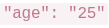 (string, not number). Using Pydantic, what happens?
- A. Server crashes — string types are incompatible.
- B. Encrypts the string so it can't be read as number.
- C. Automatically converts the string "25" to integer 25.
- D. Deletes the variable due to wrong format.
Answer — C
Automatically converts the string "25" to integer 25.
Why
Pydantic's model is validate and coerce: declare age: int, send "25", and
it converts in the same breath as validating. Genuinely invalid values ("abc")
raise a ValidationError — a clean 422, not a crash.
This is the fail-fast philosophy from ET-2 in miniature: catch bad data at the boundary with a schema, not deep inside the pipeline.
Q15 · System vs user prompts
🟢 Easy · ⭐⭐ · 1 mark (2-mark tier) · Topic: LLM prompting · Also asked: T1-2026 AN Q23, ET-1
When sending instructions to an LLM, developers often place core rules (like "you are a strict assistant") into a "System" prompt, while placing the user's question into a "User" prompt. Why is separating these useful?
- A. It cuts down prompt word count to save money.
- B. Models pay closer attention to System prompts, reducing user override attempts.
- C. System prompts work offline without an internet connection.
- D. It blocks users from typing words listed in System prompts.
Answer — B
Models pay closer attention to System prompts, reducing user override attempts.
Why
The same concept as AN Q23 asked as "why is this design useful" instead of "which defense" — one concept, three angles across the two shifts. LLMs weight system prompts higher; separation is what makes prompt injection harder, not impossible.
Part 3 · Three-mark questions
Q16 · The username race condition
🟡 Medium · ⭐ · 1 mark (3-mark tier) · Topic: Databases · Also asked: ET-1
Two users attempt to sign up with the same username simultaneously. Your server checks if the username exists, then adds it if available. Without locking, what will likely occur?
- A. Both requests check simultaneously, see it's available, and both create the user.
- B. Python pauses the server to queue incoming requests automatically.
- C. The database detects duplicates and deletes both requests.
- D. The network router blocks duplicate requests before reaching the server.
Answer — A
Both requests check simultaneously, see it's available, and both create the user.
Why
The classic check-then-act race: two processes read "available" in the same instant, both proceed. The fix is making check-and-write atomic — a database lock, a unique constraint (let the DB reject the second insert), or a transaction.
Nothing in the stack rescues you for free (B, C, D all invent referees). The exam pattern: "simultaneous" + "checks then writes" = race condition.
Q17 · The 94% → 76% accuracy drop
🟡 Medium · ⭐ · 1 mark (3-mark tier) · Topic: ML evaluation · Also asked: T1-2026 AN Q16, ET-1
A team trains a sentiment classifier achieving 94% test accuracy. They discover 200 test reviews accidentally appeared in training data. After removing duplicates and retraining, accuracy drops to 76%. What does this reveal?
- A. Removing training data naturally reduces accuracy.
- B. The 94% was inflated by test leakage — the model memorized test examples.
- C. The duplicates contained critical patterns needed for learning.
- D. The random seed changed, causing different train-test splits.
Answer — B
The 94% was inflated by test leakage — the model memorized test examples.
Why
The data-leakage twin of AN Q16 (which added how leakage happens: shuffling time series + rolling stats before the split). The signature: suspiciously high test accuracy + shared rows = leakage. After cleanup, 76% is the honest number — the model can't recite answers it never learned.
Part 4 · Scenario block 1 — the LLM cache + injection story (Q18–23)
Read the passage carefully:
A student builds a simple API that connects to a Large Language Model (LLM). To save time and expenses, the student configures a cache so that repeated questions skip the LLM entirely and return an instant answer. To stop prompt injection attacks, the developer filters the user's text for bad words before safely sending it.
During a testing session, a user cleverly tricks the API using a formatting loophole, causing the LLM to output a badly formatted hallucination. Because of the cache rules, the system memorizes this bad response. When other users ask the exact same question, they also receive the incorrect hallucination directly from the cache. Meanwhile, when the student tries testing their API locally from an HTML file, the browser blocks the connection outright.
Q18 · The local HTML block
🟢 Easy · ⭐⭐ · 1 mark · Topic: CORS
When the student opens their testing HTML file in Chrome, why does it block the connection to their backend API?
- A. Backend lacks CORS headers for cross-origin requests.
- B. Browsers don't allow JavaScript in local HTML files.
- C. The API broke and returned a blank error page.
- D. Antivirus stopped the network connection.
Answer — A
Backend lacks CORS headers for cross-origin requests.
Why
Third appearance of CORS across the two shifts (AN Q13,
AN Q18) — the exam treats it as
load-bearing. A file:// page (or different port) is a different origin; no
allowance, no read.
Q19 · Reading the cache duration
🟢 Easy · ⭐⭐ · 1 mark · Topic: Caching
The API uses  . How long does the cache hold data?
- A. 7,200 milliseconds
- B. 7,200 minutes
- C. 2 hours
- D. 72 days
Answer — C
2 hours.
Why
A pure units question with a trap ladder: ms (A), minutes (B),
seconds-reinterpreted-as-days (D). max-age is always in seconds — 3600 = 1
hour, 7200 = 2. The story's sting: the cached hallucination also lived 2 hours —
caching amplifies whatever you cache, good or bad.
Q20 · The malformed JSON crash
🟡 Medium · ⭐ · 1 mark · Topic: JSON parsing
The API expects 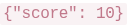 . The LLM outputs
 . What happens with
 ?
- A. Throws
 — extra text breaks JSON syntax.
- B. Drops the extra word and reads the dictionary.
- C. Ignores the response and re-queries the LLM.
- D. Converts everything into a long string list.
Answer — A
Throws JSONDecodeError — extra text breaks JSON syntax.
Why
Strict parsing, again — same family as the single-quote crash from ET-1. An LLM wrapping its JSON in "Here is your answer: {...}" is why Structured Outputs exists (AN Q20): constrain generation so the syntax can't be violated in the first place, instead of detecting the violation after.
Q21 · Forcing a fresh fetch
🟢 Easy · ⭐⭐ · 1 mark · Topic: Caching
The student wants to bypass the cache to get fresh results. What technical trick forces a new request?
- A. Add a random query parameter (like
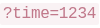 ) to mutate the cache key.
- B. Turn off the router and reconnect to Wi-Fi.
- C. Hard-refresh the browser tab by pressing F5 once.
- D. Email the cloud provider to clear the server cache.
Answer — A
Add a random query parameter to mutate the cache key.
Why
The cache-buster again (AN Q22). Caches key on the full URL — a new URL is a cache miss, and the origin gets hit. B, C, D escalate from superstition to absurdity.
Q22 · Structured Outputs vs Python validation
🟡 Medium · ⭐ · 1 mark · Topic: LLM APIs · Also asked: T1-2026 AN Q20
What's the key difference between LLM "Structured Outputs" and Python validation for preventing malformed JSON?
- A. Structured outputs run server-side; Python runs client-side.
- B. Structured outputs constrain token generation; Python detects errors post-generation.
- C. Structured outputs cache results for 3600s; Python rechecks each response.
- D. Structured outputs encrypt JSON; Python leaves data unencrypted.
Answer — B
Structured outputs constrain token generation; Python detects errors post-generation.
Why
The sharpest phrasing of the concept in either shift. Structured Outputs removes
invalid JSON from the sample space; json.loads + try/except catches the
failure after the model already produced it. Both belong in a real system (defense
in depth), but they are different layers. A's server/client split is the seductive
wrong answer: both typically run in your backend.
Q23 · The robust filter
🟡 Medium · ⭐⭐ · 1 mark · Topic: Prompt injection · Also asked: ET-1
The user bypasses the "Ignore" filter with "IGNORE" or "Ign0re". What validation is more robust?
- A. Convert to lowercase and use regex for character substitutions.
- B. Increase cache timeout to 7200 seconds.
- C. Add CORS policy blocking uppercase characters.
- D. Configure
asyncio.gather()to skip suspicious requests.
Answer — A
Convert to lowercase and use regex for character substitutions.
Why
Same question as Q12 from the fix side, and the options here are beautiful nonsense: B is a caching knob, C confuses CORS with input validation, D drags concurrency into it. The exam's meta-pattern: wrong options name real tools attached to the wrong problem.
Part 5 · Short-answer questions (Q24–25) — LLM-graded
Scenario: FASTAPI_ENDPOINT_RELIABILITY
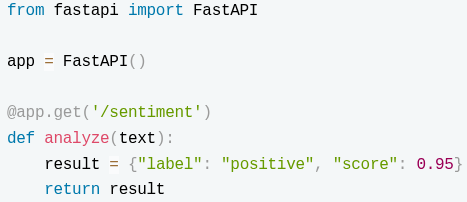
A student develops a simplistic sentiment analysis API using FastAPI. However, during staging, the endpoint behaves inconsistently when invalid inputs are processed, and the overall API contract remains severely unclear to downstream clients.
For example, if the  parameter is entirely missing, the API occasionally fails silently without throwing clear errors. Moreover, if the
 parameter is passed but is completely empty (e.g.
 ), the system defaults to returning a "positive" sentiment. This renders the inference service highly unreliable for real-world integration architectures.
Given Application State ( ):
Q24 · Making the endpoint reliable
🟡 Medium · 2 marks · Topic: API design · Short answer — max 200 words
Write the necessary Python/FastAPI technical improvements required (e.g., Type Hinting) to structurally force the endpoint to become reliable.
Model answer (ours — the paper shows no solution)
The principle: validation at the boundary — the endpoint must reject what it can't process, loudly and consistently.
- Type hints + Pydantic models: declare the request body as a model
(
class ReviewRequest(BaseModel): text: str), so missing fields return an automatic 422 instead of failing silently downstream. - Constrain emptiness:
text: str = Field(min_length=1)— an empty string is now a validation error, not a silent "positive." - Explicit response model: declare the response schema
(
response_model=SentimentResponse) so the contract is visible to clients. - Fail fast with clear errors: return structured error details (field, reason), never a guessed default.
- Trade-off: stricter contracts reject sloppy callers — that is the point; a clear 422 is cheaper than a confident wrong label.
How to write it in the exam
The improve-a-design shape: name the missing principle first (boundary validation), then bullets mapping it to concrete FastAPI mechanics, then one trade-off. Keywords the grader ticks: type hinting, Pydantic, 422, response model, fail fast.
Q25 · GET or POST?
🟡 Medium · 2 marks · Topic: REST design · Short answer — max 200 words
Should an LLM/Sentiment inference endpoint ideally operate via a GET mapped method, or a POST method? Provide a rigid technical justification analyzing payload limits and REST architectures.
Model answer (ours)
Conclusion: POST.
- REST semantics: POST submits a body for the server to process; GET retrieves a resource without side effects. Sentiment analysis submits text for inference — a POST by design.
- Payload limits: GET carries data in the URL, which browsers and servers cap (often ~2 KB); review text can far exceed that. POST carries it in the body, uncapped.
- Caching side effect: GET responses may be cached by proxies/CDNs — a URL-keyed cache could serve one user's result to another. POST is not cached by default, so identical texts can still share an explicit application-level cache.
- Assumption: the endpoint is authenticated; rate limiting applies at the gateway either way.
How to write it in the exam
This exact question is worked line-by-line (bad answer vs good answer) in the grading guide — it's our flagship example of conclusion-first, bullet-per-reason, one-assumption-last.
Part 6 · Scenario block 2 — StreamFlix, the API gateway (Q26–28)
Read the passage carefully:
StreamFlix, a video streaming platform, serves 50 million users across 200 countries. Their mobile app, web player, and smart TV apps all connect to over 80 different backend microservices — user profiles, recommendations, video encoding, billing, analytics, and more. Managing 80 different API endpoints created chaos: mobile developers hardcoded URLs that broke during server migrations, and each service implemented its own authentication logic inconsistently.
The engineering team deployed an API gateway — a single entry point at  that routes requests to appropriate backends. Now the mobile app calls one endpoint, and the gateway forwards
 to the profile service,
 to the content service, and
 to the payment service. Authentication happens once at the gateway using OAuth tokens, eliminating redundant auth code across 80 services.
However, last month the gateway crashed during a traffic spike, taking down the entire platform for 12 minutes despite all backend services running fine. The incident report revealed that debugging was harder — errors could originate from the gateway's routing logic, authentication middleware, backend services, or network issues between layers. The team now implements health checks, circuit breakers, and runs multiple gateway instances for redundancy.
Q26 · Who routes the request
🟢 Easy · 1 mark · Topic: API architecture
You need to add a new  endpoint to the API gateway. Which component handles routing this request to the payment service?
- A. The mobile app's HTTP client library configuration.
- B. The gateway's routing rules and path-matching logic.
- C. The payment service's database connection pooling settings.
- D. OAuth token validation middleware in each backend service.
Answer — B
The gateway's routing rules and path-matching logic.
Why
The gateway's whole job: one entry point, centralized routing (path → service) and centralized authentication. Clients know one URL; the gateway owns the map. That's what killed the hardcoded-80-URLs chaos in the story.
Q27 · Surviving the crash
🟡 Medium · ⭐ · 1 mark · Topic: API architecture · Also asked: ET-1
During a traffic spike, your single API gateway instance crashes. What architectural change prevents complete platform outages?
- A. Increase database connection pool size on each backend service.
- B. Deploy multiple gateway instances with load balancing redundancy.
- C. Cache all API responses permanently on client devices.
- D. Remove authentication to reduce gateway processing overhead.
Answer — B
Deploy multiple gateway instances with load balancing redundancy.
Why
A single gateway is a single point of failure — the story says it plainly (12 minutes of darkness). Redundancy is the answer: multiple instances + a load balancer + health checks. ET-1's one-liner: one gateway = one failure away from outage.
D removes security to buy speed — a trade the exam marks as wrong on principle.
Q28 · Debugging the 500
🟡 Medium · ⭐⭐ · 1 mark · Topic: HTTP status codes · Also asked: ET-2
A request to  returns a 500 error. Which layers should you check when debugging?
- A. Only the mobile app's HTTP request formatting code.
- B. Gateway routing, authentication middleware, video service, and network connectivity.
- C. Only the PostgreSQL database query performance metrics.
- D. Only the CDN cache configuration for video content.
Answer — B
Gateway routing, authentication middleware, video service, and network connectivity.
Why
5xx = server-side failure — but with a gateway in the path, "server-side" spans four hops: routing logic, auth middleware, the service itself, and the network between them. The story makes debugging harder precisely because errors can originate anywhere along the chain.
🟢 Must remember: 401/403 → your credentials/permissions · 429 → slow down · 500 → the server's problem, every layer it crossed is suspect.